
FRANK GARI
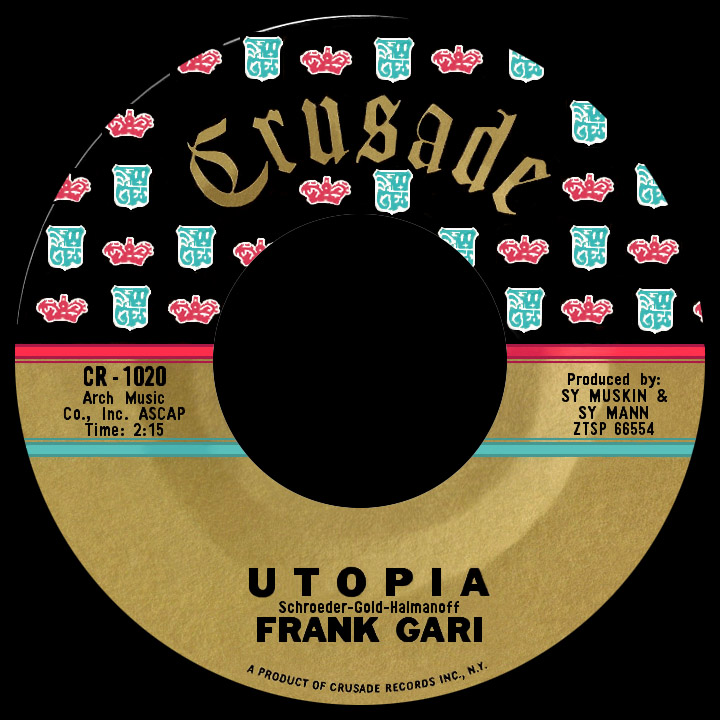
Utopia
The concept of utopia is purely fictional, a creation of British author Thomas More, who was 38 years old when his novel Utopia was published in 1516. A bizarre depiction of a so-called ideal civilization, it requires the cooperation of all its citizens working towards a life of leisure and pleasure (located on an island with many castles, the story's villains, rule-breakers and slaves indicate life isn't truly ideal in Utopia). Later, the term stood for the positive parts of the book while other aspects were conveniently ignored, likely because such a goal is considered unattainable; by the 20th century it stood for a perfect place or perception (despite its translation in Greek: "nowhere"). The also-fictional Shangri-La was introduced in James Hilton's 1933 novel Lost Horizon, bringing its intriguing Himalayan society to modern readers and gaining further popularity after a cinematic version was depicted in the 1937 film of the same title. The two terms have been used interchangeably ever since, while utopia seems to have a broader pop culture definition as something appealing but less fathomable.
Frank Garofalo didn't go searching for an "ideal world," though a chance at a music career was within his reach just a short distance from his home in New York City. His mother played piano, father fancied the guitar and his sister studied ballet, so he followed their lead and put together a band in high school. One day he made the trek to Times Square, turning right and going up a couple of blocks to Broadway and 49th Street where the Brill Building, with its many record companies, stood waiting for him to...well, just stand out in front. Jimmy Crane, a singer-songwriter and the owner of Ribbon Records, walked by and asked if he was a singer. Frank faked it and said yes, so Crane invited the 15-year-old to his small office inside the building and offered him a chance to make a record. Fall '59 release "Lil' Girl" ('...she's four-foot-nine!') was the result, penned by rock and roller and songwriter Eddie Deane and produced by Gerry Granahan. An unremarkable teen tune credited to the concisely-named Frank Gari, it struggled out of the gate. Nearly a year passed before a second disc, "Orang-U-Tang Tango," reached an even lower level of kitsch.
Sy Muskin, who ran the Crusade label out of the Brill Building, picked up Gari's contract and matched him with songwriters Aaron Schroeder and Wally Gold, who'd written several of Elvis Presley's hits. With Martin Kalmanoff, they came up with a romanticized, orchestrated take on the "Utopia" legend ('...the land where every dream you dream comes true...'), a place with 'golden skies and birds of paradise.' Frank hit the road in the fall of 1960, playing sock hops in many cities. The single gained steam near the end of the year and in the early months of 1961 it reached the top ten on stations in a handful of cities and top 20 in at least a dozen more while making the top 30 on the toughest chart of them all, Billboard's Hot 100 singles. The song's final line, 'I found Utopia when I found you,' suggested the popular 'magic land' was more of a feeling than an actual, or even make-believe, place.
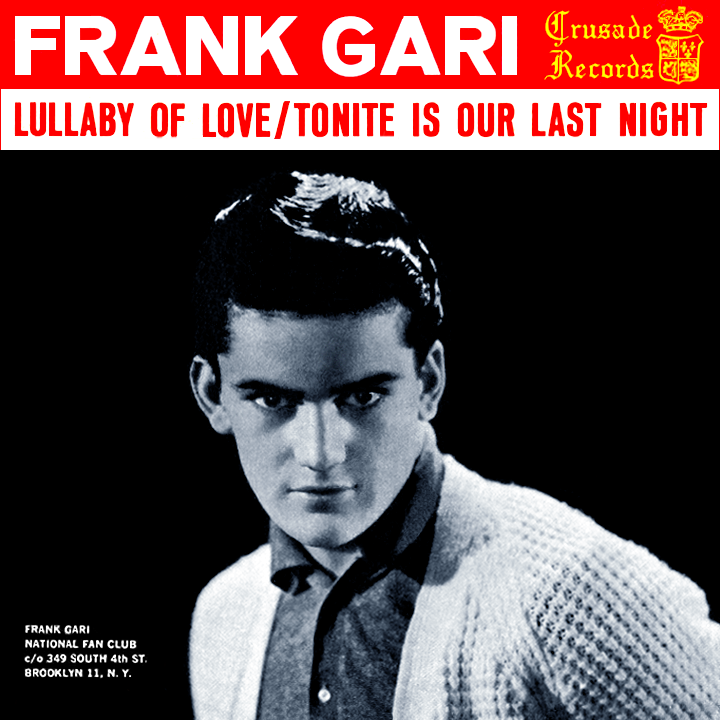
Frank performed on a few TV shows (Steve Allen, Merv Griffin), with several outings on Philadelphia's high-rated American Bandstand the most notable. The masters to two songs he'd done before signing with Crusade were picked up by United Artists (A side: "Be My Girl," its arrangement similar to "Utopia"), but didn't connect. He did a series of live shows including sold-out Alan Freed extravaganzas at the Brooklyn Paramount Theatre. Next came "Lullaby of Love" (Sy Muskin and Sy Mann accounting for two of the tune's four writers), then "Princess," penned by Hal David and occasional composing colleague Paul Hampton (whose two best-known songs, perhaps, were Don Gibson's hit "Sea of Heartbreak" and the the theme from Jerry Van Dyke's sitcom My Mother the Car). These follow-ups, both sonically consistent with "Utopia," found Frank back in familiar top 30 territory in the spring and summer of '61.
Ah, those small labels that drop an artist at the first sign of downward movement. "There's Lots More Where This Came From," a Hampton-David 'Dum-da-da-da-da-dum-dum-da-dum' ditty, revealed a more mature vocal sound (breaking the three-hits-in-a-row curse - is that a thing? - with a weird, virtually guaranteed stiff). Muskin sent him on his way, so he simply pushed the elevator button, went up a floor, and convinced the A&R staff at Atlantic Records (Jerry Wexler, et al), to give him a shot. "Ain't That Fun," written by Tony Powers and Jeff Barry, produced by Bert Berns and arranged by Klaus Ogerman, despite input from these stellar figures in the music biz, also had Frank's "new" vocal sound, which the fans weren't buying into.
With his career as a singer in freefall, he decided to step away from the rapidly-dimming spotlight and concentrate on writing and production. Keeping the Brill Building as his Big Apple oasis, he started working for Bobby Darin's T.M. (Trinity Music) publishing company (coinciding with Darin's switch from Atlantic to Hollywood's Capitol Records, though he kept his home base in New York). Guitarist-songwriter Jim McGuinn signed on (later, as Roger McGuinn, he became a star with L.A.-based band The Byrds). Jumping on the then-hot surf craze, the three made a couple of 1963 singles for Capitol as City Surfers ("Beach Ball" and "Powder Puff," both with songwriting credit to Gari as co-writer). Though the project was fun, it lacked results. In 1968 Frank had one final single under his own name, "Love That's Where it Is," a Darinesque pop vocal performance, his swan song on Capitol.
Gari got married, moved out of the N.Y. rat race, and settled in his wife's hometown, Cleveland. He started his own company, creating thousands of TV jingles and commercials ("you deserve a break today" for McDonalds is just one famous example). He wrote a news jingle ("Catch Five") for WEWS-TV, channel 5 in Cleveland, which led to many others locally and, eventually, for the big networks' news and entertainment shows (NBC's Good Morning America, CBS This Morning and others, for every major network and several top cable/satellite channels). Ultimately moving to Los Angeles, he became a leader in the jingle/theme song field for the next 40 years or so...long enough to overlap with what might be called the 21st century evolution of "dystopia" (fiction having turned unsettlingly real...well, depending on who you ask). Yet Frank Gari has managed to live a lifetime in his own personal version of "Utopia."